

 Furniture Buying Guides — Delhi NCR
How to Plan a Home Bar Counter That Actually Gets Used
A bar counter is the one piece of furniture that either becomes the center of every evening, or a very expensive spot to pile mail. Here's how to size, material, and lay it out so it's the former.
A bar counter is furniture with a job to do
Unlike most living room pieces, a bar counter has to actually function — hold bottles without tipping, survive spilled citrus and condensation rings, and give whoever's pouring enough surface to work without elbowing the guest next to them. Get the proportions and material wrong and it becomes the piece everyone avoids standing near; get it right and it's where every party ends up gathering.
The three decisions that matter most are size (relative to your room and how many people you actually host), material (does it survive real use, not just look good in photos), and layout (storage, working space, and where the "back of house" mess goes). Style is the easy part once those three are settled.
Sizing to your space and your guest count
| Setup | Counter length | Best for |
|---|---|---|
| Compact corner | 3–4 ft | Apartments, a single host pouring for 2-4 people |
| Standard home bar | 5–7 ft | Most living rooms, hosting 6-10 guests comfortably |
| Statement / basement bar | 8 ft+ | Dedicated entertainment rooms, farmhouses, larger gatherings |
Leave at least 24-28 inches of clearance behind the counter for the person pouring to move freely, and roughly 20 inches of counter width per seated guest if you're pairing it with bar stools.
What actually holds up to citrus, ice, and late nights
| Material | Look | Good to know |
|---|---|---|
| Marble / Onyx | Cool, high-shine statement surface | Stunning, but porous — needs sealing or a protective finish to resist wine and citrus stains |
| Sintered stone | Mimics marble closely | Non-porous, scratch and stain resistant — the practical choice for a working surface |
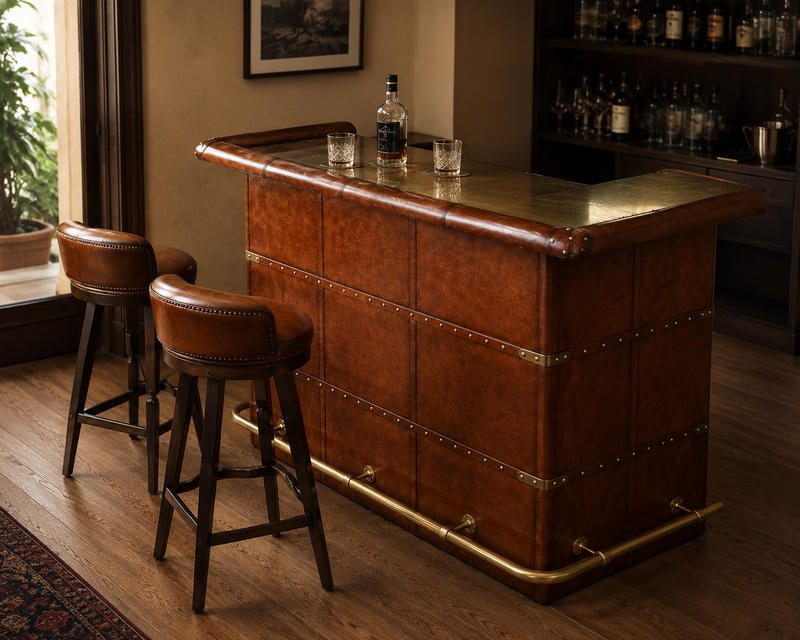
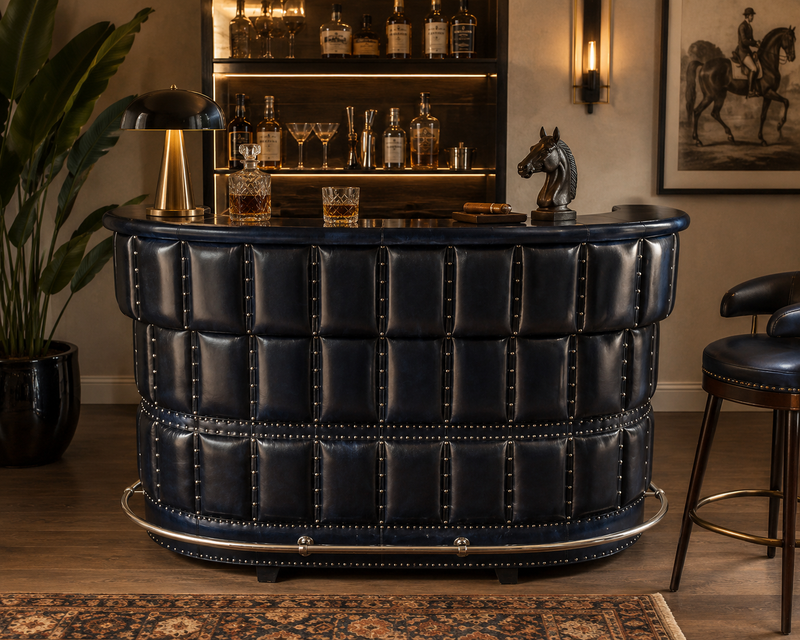
| Leather-wrapped | Warm, tactile, residential feel | Ages well with use; wipe spills quickly to avoid watermarks |
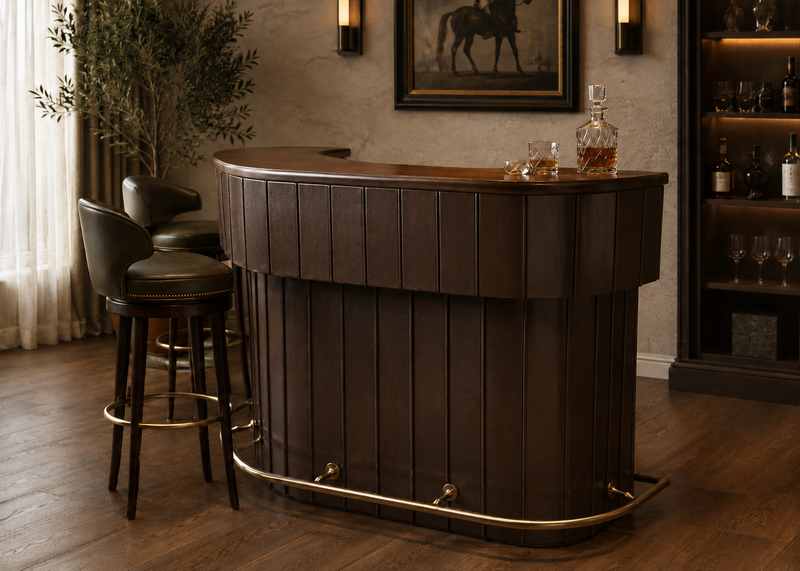
| Walnut / fluted wood | Classic, warm, blends with living room furniture | Look for a sealed or lacquered finish near the pour zone specifically |
| Brass / metal accents | Adds a sharp, finished edge | Common on footrails and trim; check for a tarnish-resistant coating |
Designing the working side, not just the front
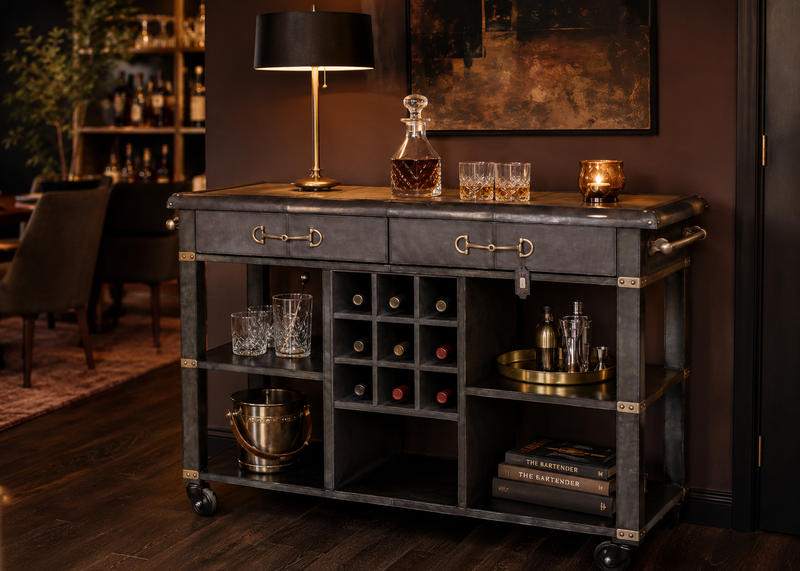
Decide open shelving vs. closed storage first
Open shelving shows off bottles and glassware but demands consistent styling. Closed cabinets hide the mess — mixers, spare glasses, half-used bottles — and are the more forgiving option for daily life.
Plan a dedicated pour zone
A clear stretch of surface near the center, away from where glasses and bottles sit, keeps pouring and mixing from turning into a balancing act.
Think about what's actually plumbed
A true wet bar (with a sink) needs pre-planned plumbing access — retrofitting this later is expensive. If you're not sure you need it, a well-designed dry bar with an ice bucket zone covers most home hosting needs.
Add a footrail if you're pairing with stools
An integrated brass or steel footrail at the right height makes a real difference to how long guests actually stay seated and comfortable.
Compact leather or wood bar units from roughly ₹95,000; mid-size statement bars with premium finishes ₹1,50,000-₹1,80,000; full custom marble or onyx installations priced higher depending on scale and finish.
Visit an Avian Lifestyle showroom
Compare scale, counter height, storage, and finish in person before choosing a bar counter for your home.
Enza Home Flagship
KH 432-434, Mehrauli-Gurgaon Rd, Gadaipur, Sultanpur, Delhi 110030
Bring your room dimensions — we'll help you plan the layout.
Our team can walk you through sizing, material, and storage options for your exact space, in person or over a call.
Common questions
Do I need a wet bar, or is a dry bar enough?
Most home hosting needs are covered by a well-planned dry bar with a good ice bucket and storage. A wet bar (with plumbed sink) makes sense mainly for dedicated entertainment rooms or frequent large-scale hosting.
Can a bar counter work in a living room, not just a basement?
Yes — compact or console-style bar units are designed specifically for living rooms and lounges, without needing a dedicated bar room.
What's the standard height for a home bar counter?
Typically 42-45 inches, taller than a standard dining table, to pair correctly with bar-height stools rather than counter-height ones.
Do bar counters need matching bar stools?
Not strictly, but matching (or intentionally contrasting) stools noticeably improve comfort and how "finished" the setup looks. Confirm counter height before choosing stool height.