

 Furniture Buying Guides — Delhi NCR
How to Choose a Luxury TV Unit for Your Living Room
The wrong TV unit either disappears into the wall or fights with everything else in the room. Here's how to actually pick one — sized right, styled right, with enough storage that your living room doesn't turn into cable-management chaos within a month.
A TV unit is doing more work than you think
A good TV unit isn't just a shelf under the television — it's the anchor piece of most living rooms, holding your set-top box, speakers, cables, decor, and often the one console-height surface where everything else in the room gets styled around. Get the proportions wrong and even an expensive TV looks awkward; get them right and a modest setup looks considered.
The three decisions that actually matter are size (relative to your TV and wall), material (does it match your other furniture and last), and storage style (open shelving vs. closed cabinets vs. a mix). Everything else — finish, color, hardware — is personal taste once those three are right.
Match your TV unit width to your screen size
Compact unit
3.5–4.5 ft wide console. Works well in smaller living rooms or bedrooms.
Standard unit
5–6 ft wide console. The most common living room configuration in Delhi NCR homes.
Statement unit
6.5 ft+ wide, often paired with a wall panel or floating design for visual balance.
Your TV unit should be roughly 1.4–1.6x the width of your TV screen — narrower and the TV looks like it's overhanging the edges; wider and it starts to dominate the wall instead of the screen.
What the surface is actually made of
| Material | Look | Good to know |
|---|---|---|
| Walnut/oak veneer | Warm, natural wood grain | Durable and easy to maintain; the most common premium finish |
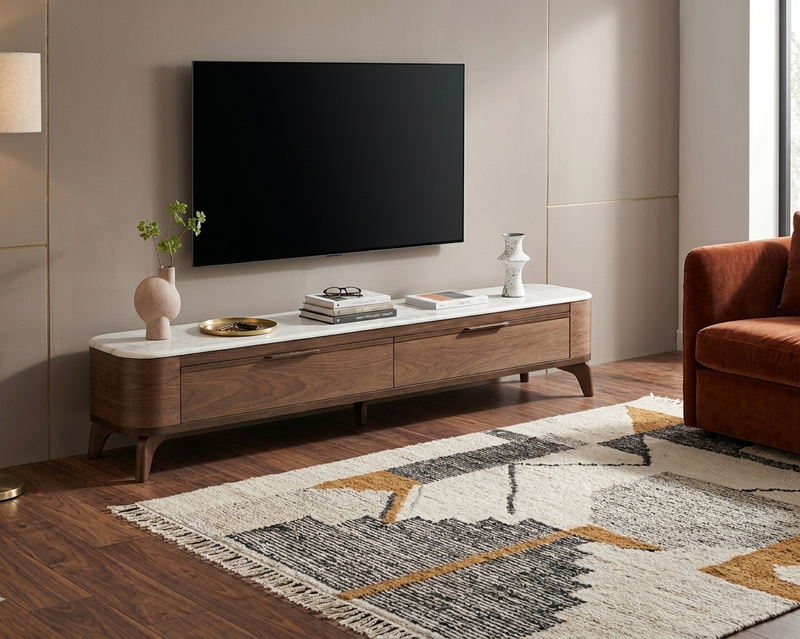
| Marble or stone top | Cool, high-gloss, statement surface | Adds real weight and cost; check for sealed/treated finish to resist staining |
| High-gloss lacquer | Sleek, reflective, modern | Shows fingerprints and dust more; wipe-friendly but needs more upkeep |
| Matte MDF/laminate | Clean, understated | Budget-friendlier; quality varies a lot by manufacturer |
| Metal accents | Structured, contemporary edge | Common on legs/hardware; check for powder-coating so it doesn't tarnish |
Open shelving vs. closed cabinets vs. a mix
- Open shelving — best if you like displaying decor or books, but everything on it is visible, including cable clutter, unless you're disciplined about styling it.
- Closed cabinets — hides set-top boxes, routers, and remotes completely; the practical default for most Indian living rooms with multiple devices.
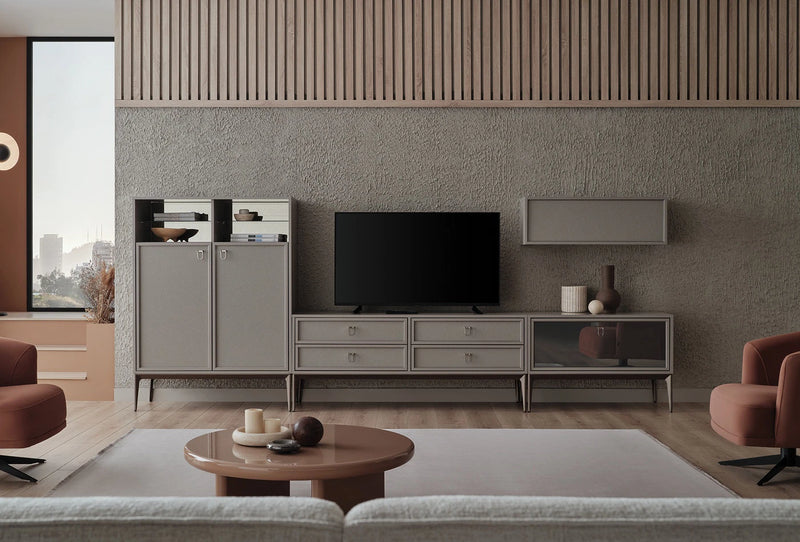
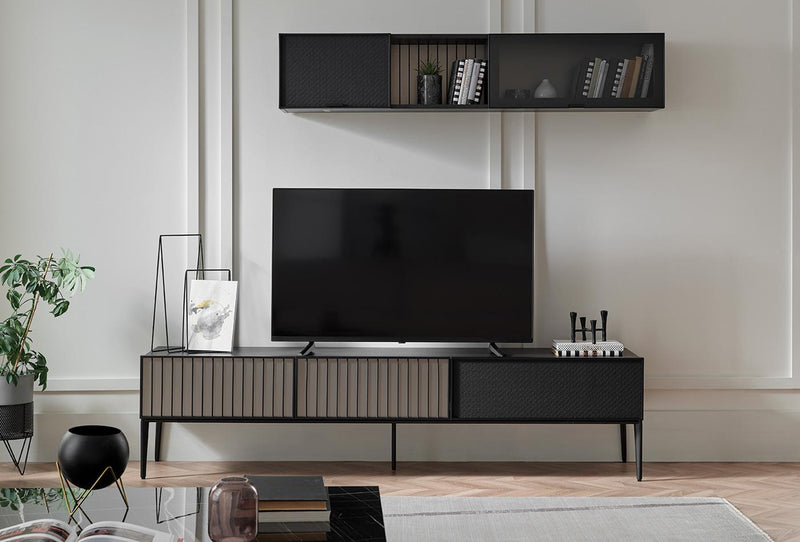
- Mixed design — a closed cabinet section for equipment plus an open shelf or display niche for decor — gets you both, and is the most common configuration in premium units today.
- Check for a cable-management cutout at the back — a small detail that saves a lot of visible mess later.
- If you have a soundbar or gaming console, measure its height before buying — some closed cabinets don't have enough clearance with the doors shut.
Compact veneer units from roughly ₹28,000; standard 5–6 ft units with mixed storage ₹45,000–₹85,000; marble-top or designer statement units ₹90,000–₹1,80,000+ depending on size and finish.
For bigger screens, a console is often the better fit
A traditional "TV unit" is usually taller and boxier, with more vertical storage. A console is typically lower-profile and wider — which matters more than it sounds once you're mounting a 65"+ screen, since a low, long silhouette keeps the proportions balanced instead of the TV visually swallowing a small stand. If your screen is 65" or larger, look at consoles first; under 55", a standard TV unit works fine.
Designs worth a look
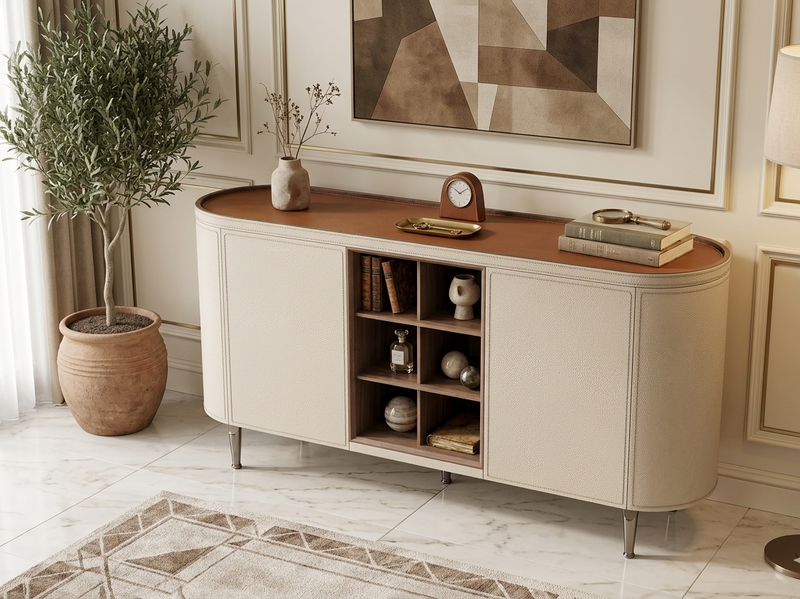
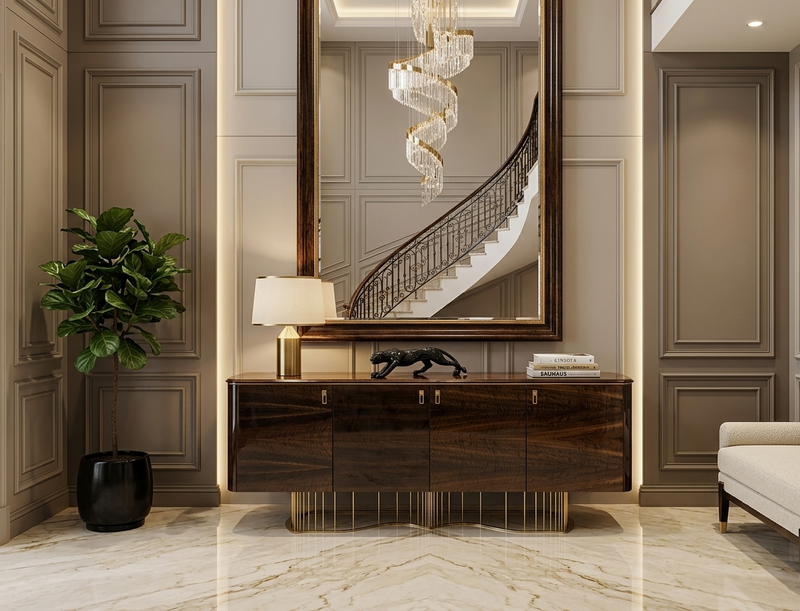
Photos rarely capture veneer grain, marble veining, or leather texture accurately — worth seeing these in the showroom before deciding.
Visit an Avian Lifestyle showroom
See the marble veining and veneer grain in person, and check proportions against a similar-sized TV in-store.
Enza Home Flagship
KH 432-434, Mehrauli-Gurgaon Rd, Gadaipur, Sultanpur, Delhi 110030
Bring your TV size and wall dimensions — we'll help you find the right fit.
Our team can walk you through proportions, storage layout, and finish options for your exact living room, in person or on a call.
Common questions
Should my TV unit match my sofa or my flooring?
Flooring, generally — a TV unit that echoes your floor tone (or contrasts deliberately with a bold marble/lacquer finish) tends to look more grounded than one matched strictly to upholstery.
Wall-mounted floating unit or floor-standing console?
Floating units make small rooms feel more open and are easier to clean under, but need a solid wall mount. Floor-standing consoles offer more storage and don't require wall reinforcement — the more common choice for heavier marble-top designs.
How much clearance do I need above the unit for the TV?
Typically 4–6 inches between the top of the unit and the bottom of a wall-mounted TV, enough for cable routing and ventilation without looking like a gap.
Can a TV unit be customized in size?
Many designs can be adjusted in width or configuration to fit a specific wall — worth asking about at the showroom rather than assuming standard sizes are your only option.