

 Furniture Buying Guides — Delhi NCR
Burl Wood Furniture: Why It's Suddenly Everywhere
Search interest in burl wood furniture has spiked dramatically in 2026. Here's what burl actually is, why designers have quietly loved it for decades, and how to tell the real thing from a printed laminate copy.
A "flaw" that became the most desirable grain in wood
Burl is a deformity — a knotted, swirling growth that forms on a tree when it's stressed by injury, fungus, or environmental pressure. Instead of the straight, predictable grain of normal timber, burl wood grows in dense, chaotic swirls that no two pieces ever repeat exactly.
Furniture makers and antique dealers have prized it for centuries precisely because it's rare and unrepeatable — a burl veneer on a console or a coffee table reads as one-of-a-kind in a way that straight-grain oak or walnut simply can't. What's new in 2026 isn't the material — it's that mainstream search interest has caught up to what design insiders already knew.
The trend behind the trend
Burl's rise tracks two bigger shifts happening in furniture right now: a move toward natural, imperfect materials over uniform manufactured finishes (the same instinct behind Japandi and wabi-sabi design), and a renewed appetite for vintage and antique-inspired pieces after years of flat-pack minimalism. Burl delivers both — it's undeniably natural, and it instantly reads as heirloom rather than mass-produced.
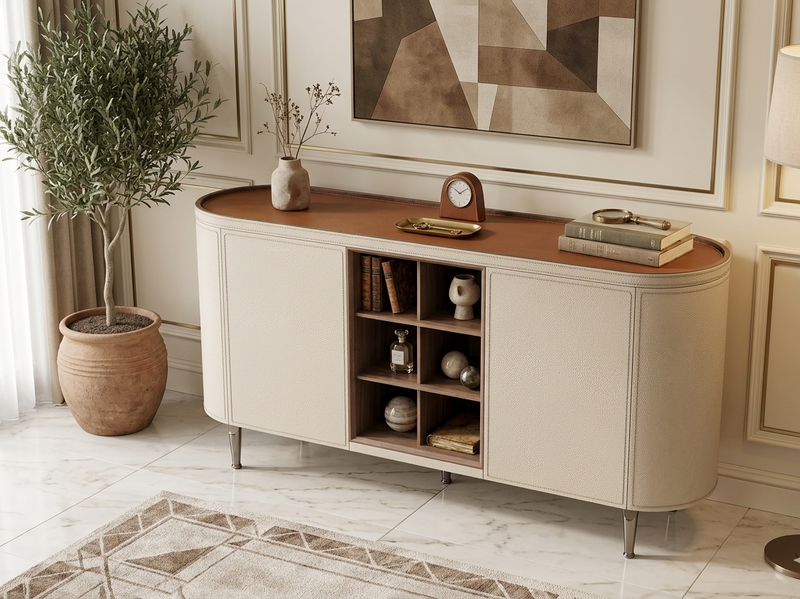
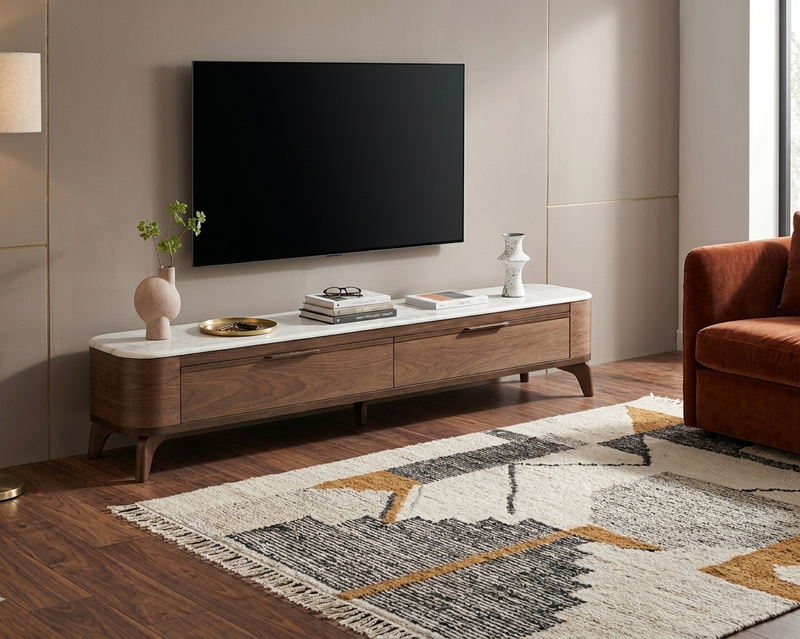
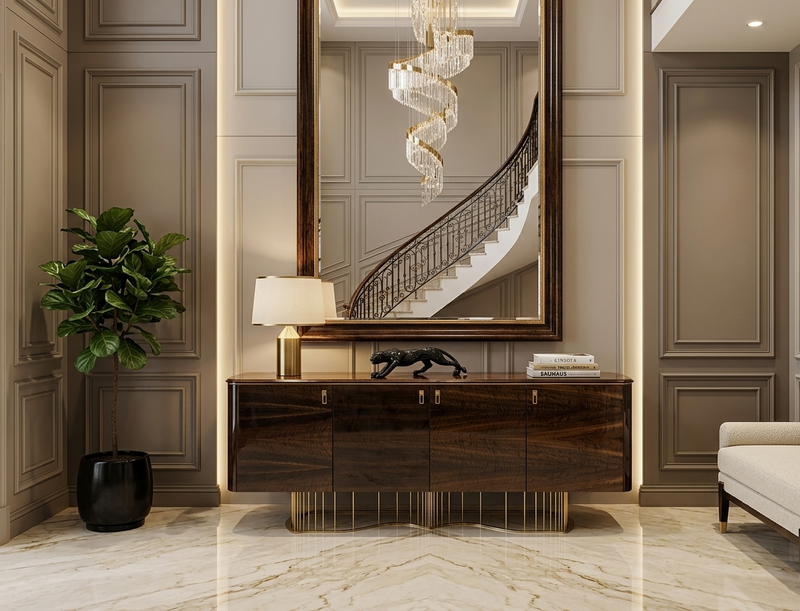
Burl is most commonly used as a veneer on statement pieces — console tables, sideboards, coffee tables, and cabinet fronts — rather than structural frames, since the material is prized in thin, dramatic slices.
How to tell genuine burl from a laminate copy
| Check | Real Burl Veneer | Printed Laminate |
|---|---|---|
| Pattern repeats | Never repeats, even across the same piece | Visible repeating pattern if you look closely |
| Touch | Slight texture variation, natural feel | Perfectly uniform, slightly plasticky |
| Edges | Grain often continues naturally around edges | Pattern usually stops abruptly at edges |
| Price | Priced at a premium over standard wood veneer | Priced similar to standard laminate finishes |
A good showroom will tell you plainly whether a piece uses genuine burl veneer or a burl-effect print — there's no shame in the latter at a lower price point, but you should know which you're paying for.
How to actually use it in a room
- Let burl be the statement — pair it with plain, quiet surfaces around it rather than competing patterns or busy upholstery.
- One burl piece per room is usually enough; it's dramatic enough to anchor a space on its own.
- Works especially well as a console, sideboard, or coffee table top where the grain is visible from above and at eye level.
- Pairs naturally with brass or warm metal hardware — the swirling grain and warm metal tones read as intentionally luxe together.
- Avoid direct, harsh sunlight on burl veneer long-term, as with any fine wood finish, to protect the color from uneven fading.
Visit an Avian Lifestyle showroom
See real wood grain and finish quality up close before choosing a statement piece.
Enza Home Flagship
KH 432-434, Mehrauli-Gurgaon Rd, Gadaipur, Sultanpur, Delhi 110030
Looking for a real statement piece?
Our team can show you genuine wood-grain finishes and help you find a piece with real presence, in person or over a call.
Common questions
Is burl wood expensive?
Genuine burl veneer costs more than standard wood veneer due to its rarity and the skill required to cut and finish it, but it's typically used as a surface veneer rather than solid wood, which keeps it more accessible than it sounds.
Is burl wood durable for everyday furniture?
Yes, when properly sealed and finished — the veneer itself is bonded to a stable substrate, so it holds up well to normal daily use.
Does burl wood suit modern interiors or only traditional ones?
Both — burl pairs surprisingly well with clean, modern silhouettes, where the organic grain provides contrast against simple forms, as much as it suits traditional or vintage-style furniture.
How do I care for burl wood furniture?
Treat it like any fine wood veneer — avoid prolonged direct sunlight, wipe spills promptly, and use a soft cloth rather than abrasive cleaners.