

 Furniture Buying Guides — Delhi NCR
The Japandi Furniture Guide for Indian Homes
Part Japanese restraint, part Scandinavian warmth — Japandi has quietly become the most-searched interior style in India for 2026. Here's how to actually build it in your home, not just your Pinterest board.
Not minimalism. Not Scandi. Something calmer than both.
Japandi merges Japanese wabi-sabi — the acceptance of natural imperfection — with Scandinavian hygge, the pursuit of everyday comfort. The result isn't stark or empty. It's a room with fewer, better pieces: low-profile furniture, natural materials, and a palette pulled from wood grain and stone rather than a paint chart.
It resonates in Indian homes for a specific reason — most of us already live with joint-family clutter, festival decor, and a lot of "just in case" furniture. Japandi isn't about stripping that away entirely. It's about choosing fewer pieces that are worth keeping, and giving them room to actually be seen.
Warm neutrals, never stark white
Japandi color comes from nature, not a paint swatch — think walnut, clay, sand, and charcoal rather than pure white or grey.
Pair one light wood (oak, ash) with one darker wood (walnut, teak) in the same room — the contrast is what keeps Japandi from feeling flat or beige-on-beige.
Low, natural, and honestly made
| Element | Look For | Skip |
|---|---|---|
| Silhouette | Low-profile sofas, platform beds, grounded proportions | Tall, ornate, heavily carved frames |
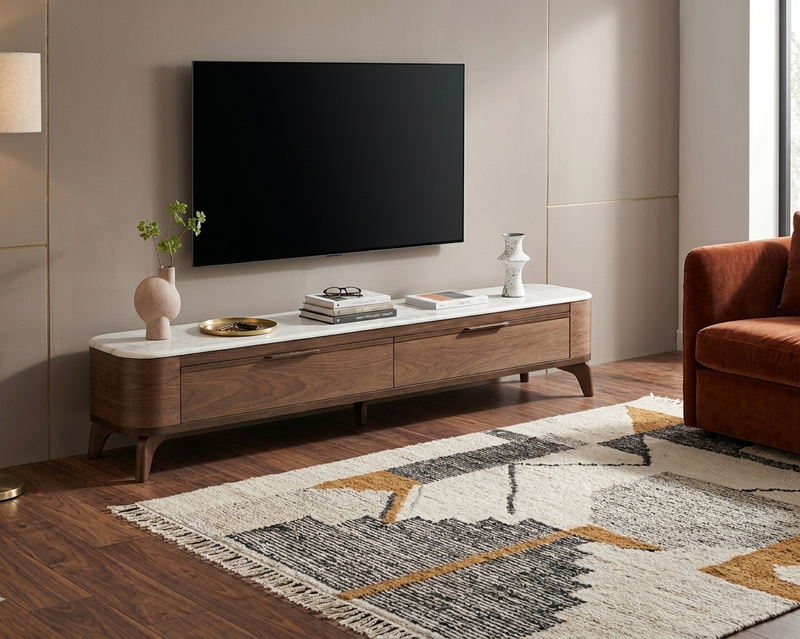
| Wood | Walnut, oak, ash, teak — visible natural grain | High-gloss laminate, painted MDF |
| Upholstery | Linen, boucle, wool in muted tones | Glossy velvet, bright prints |
| Hardware | Matte black or brushed brass, minimal | Polished chrome, ornate detailing |
| Shape | Gentle curves, rounded edges | Sharp geometric angles |
Building the look without a full renovation
Living room: start with the sofa
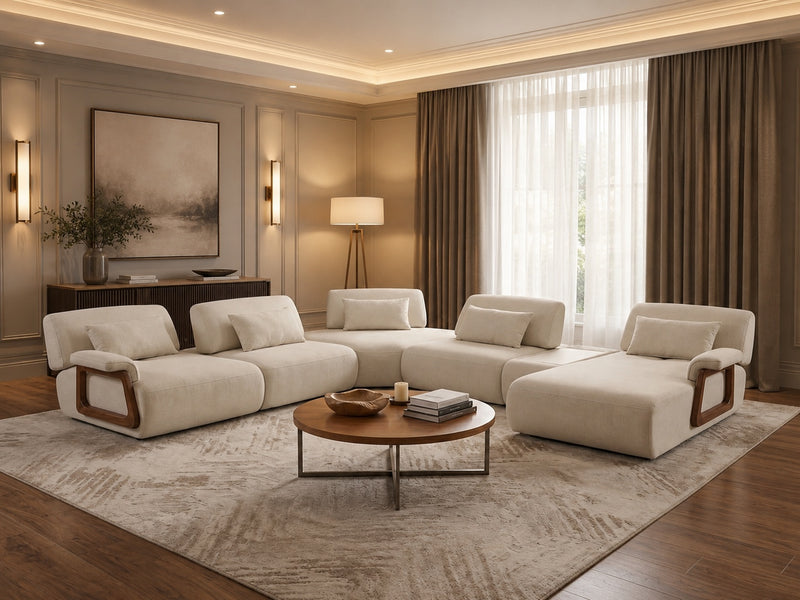
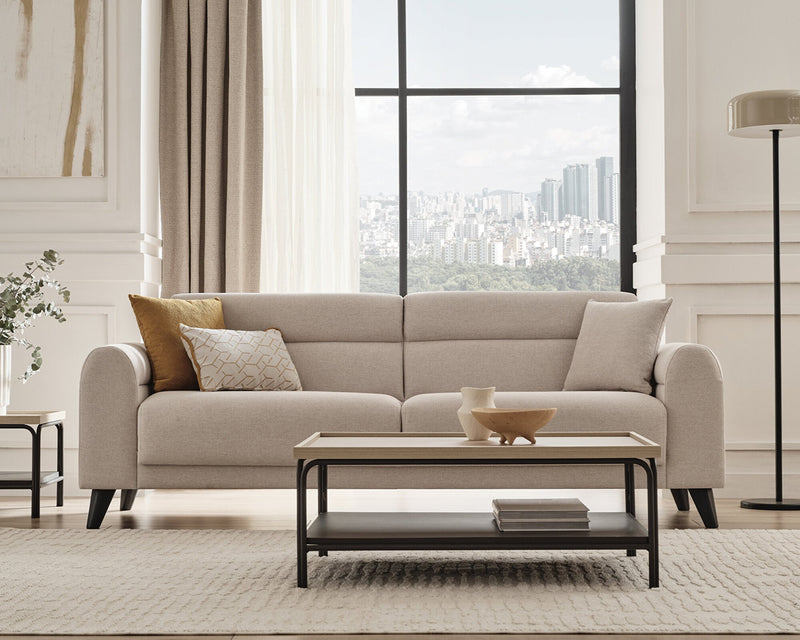
A low, linen-upholstered sofa in a warm neutral does more work than any accessory. Pair with a simple wood coffee table — rounded over rectangular — and leave visible floor space around it.
Bedroom: platform over plinth
A low platform bed in natural wood, simple linen bedding in oatmeal or clay tones, and — unusually for Indian bedrooms — a headboard you can skip entirely if the wall itself is calm enough.
Dining: one honest material
A solid wood table with visible grain, left largely unadorned. Japandi dining spaces do one material well rather than mixing five finishes.
Edit, don't empty
Keep one plant, one ceramic piece, one piece of art per surface. The goal is curated, not bare — a fully empty room reads as unfinished, not Japandi.
Japandi rewards fewer, better pieces — it's worth using an AI room visualizer or even your phone's measure app to confirm proportions before committing, since low-profile furniture reads very differently in a room than in a product photo.
Visit an Avian Lifestyle showroom
See the wood grain, fabric texture, and true proportions of Japandi-leaning pieces in person.
Enza Home Flagship
KH 432-434, Mehrauli-Gurgaon Rd, Gadaipur, Sultanpur, Delhi 110030
Not sure where to start with Japandi?
Our team can help you choose pieces, wood tones, and proportions that suit your actual room — in person or over a call.
Common questions
Is Japandi the same as minimalism?
Not quite — pure minimalism can feel cold or bare. Japandi is intentionally warmer, layering natural textures (linen, wood, ceramic) so the room still feels lived-in.
Can Japandi work with existing Indian furniture?
Yes — the easiest entry point is swapping one or two statement pieces (a sofa, a coffee table) rather than replacing everything, then editing down decor and clutter around them.
Does Japandi suit small apartments?
It's arguably better suited to smaller spaces — low-profile furniture and an edited palette make compact rooms feel calmer rather than cramped.
What's the difference between Japandi and organic modern?
Both share curves and natural materials, but Japandi stays restrained and low to the ground, while organic modern allows bolder, more sculptural statement pieces.