

Beyond the Screen
The television commands attention when it is on. The unit determines how the room feels all day. Discover the materials and hidden details defining luxury media walls in 2026.
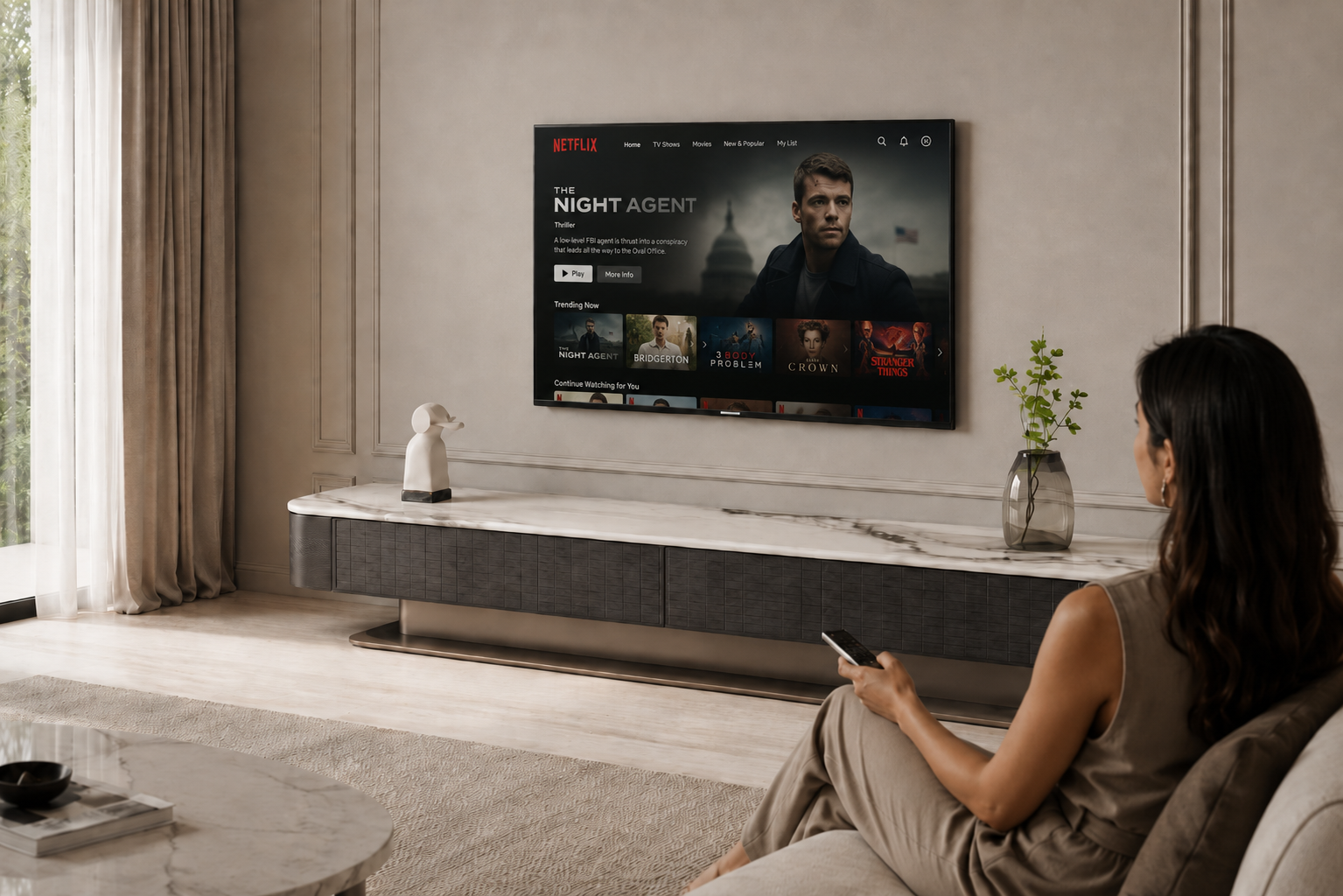
A television is a large black rectangle. Good design makes it feel intentional rather than intrusive.
The modern TV wall must solve several problems at once. It needs to balance the visual weight of the screen, establish comfortable viewing, store devices, hide cables and connect with the rest of the living room. When these decisions are handled well, technology recedes and the furniture becomes part of the architecture.
In 2026, modern TV unit design is moving toward low profiles, softer corners, tactile matte surfaces and concealed technology. Walnut adds warmth around the screen; marble and stone create a premium horizontal anchor; fluted fronts bring texture; and closed storage keeps remotes, routers, gaming consoles and cables out of sight.
Avian Lifestyle’s collection of luxury TV units in Delhi NCR includes marble and walnut consoles, low media cabinets, textured TV units and storage-led designs for living rooms, bedrooms and dedicated entertainment spaces.
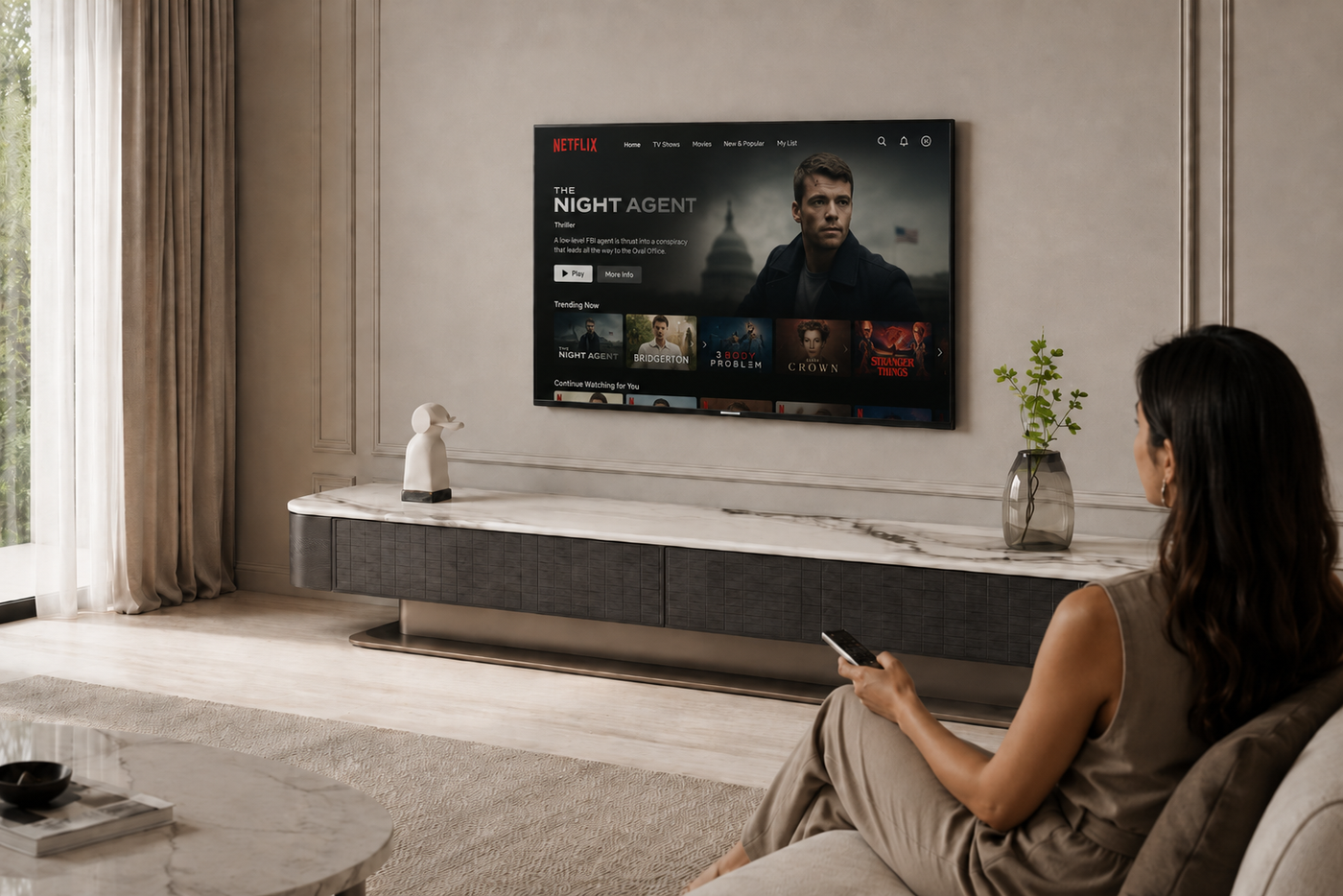
Begin with seated eye level—not the centre of the wall.
As a practical starting point, position the centre of the screen close to the viewer’s natural seated sightline. Adjust for seat height, viewing distance, screen size and personal comfort before fixing the mount.
Six trends making technology feel architectural
The strongest TV walls make the hardware quieter while giving the surrounding material, proportion and light more presence.
The invisible-tech philosophy
Concealed channels, closed device storage and planned power points remove visual noise. The aim is a single composed elevation rather than furniture surrounded by wires.
Low, extended consoles
A long horizontal unit visually grounds the screen and makes the wall feel wider. Low profiles suit contemporary sofas and preserve a calm sightline.
Floating visual weight
Wall-mounted or slender elevated units reveal more flooring, make cleaning simpler and bring a lighter architectural quality to apartments and bedrooms.
Walnut with marble or stone
The contrast between warm grain and cool mineral surfaces transforms a functional cabinet into a premium material statement without competing with the screen.
Fluted & slatted texture
Vertical rhythm adds depth to cabinet fronts and wall panels while keeping the palette restrained. Texture does the work that high-gloss colour once did.
Matte, low-glare finishes
Charcoal, smoked wood, taupe and anti-fingerprint matte surfaces feel softer than gloss, show fewer reflections and sit comfortably beside a dark television screen.
Five ways to frame the modern screen
From marble-topped anchors to textured low cabinets, choose a unit that fits the television, the devices and the visual weight of the room.
Valencia TV Unit
A refined anchor for the screen →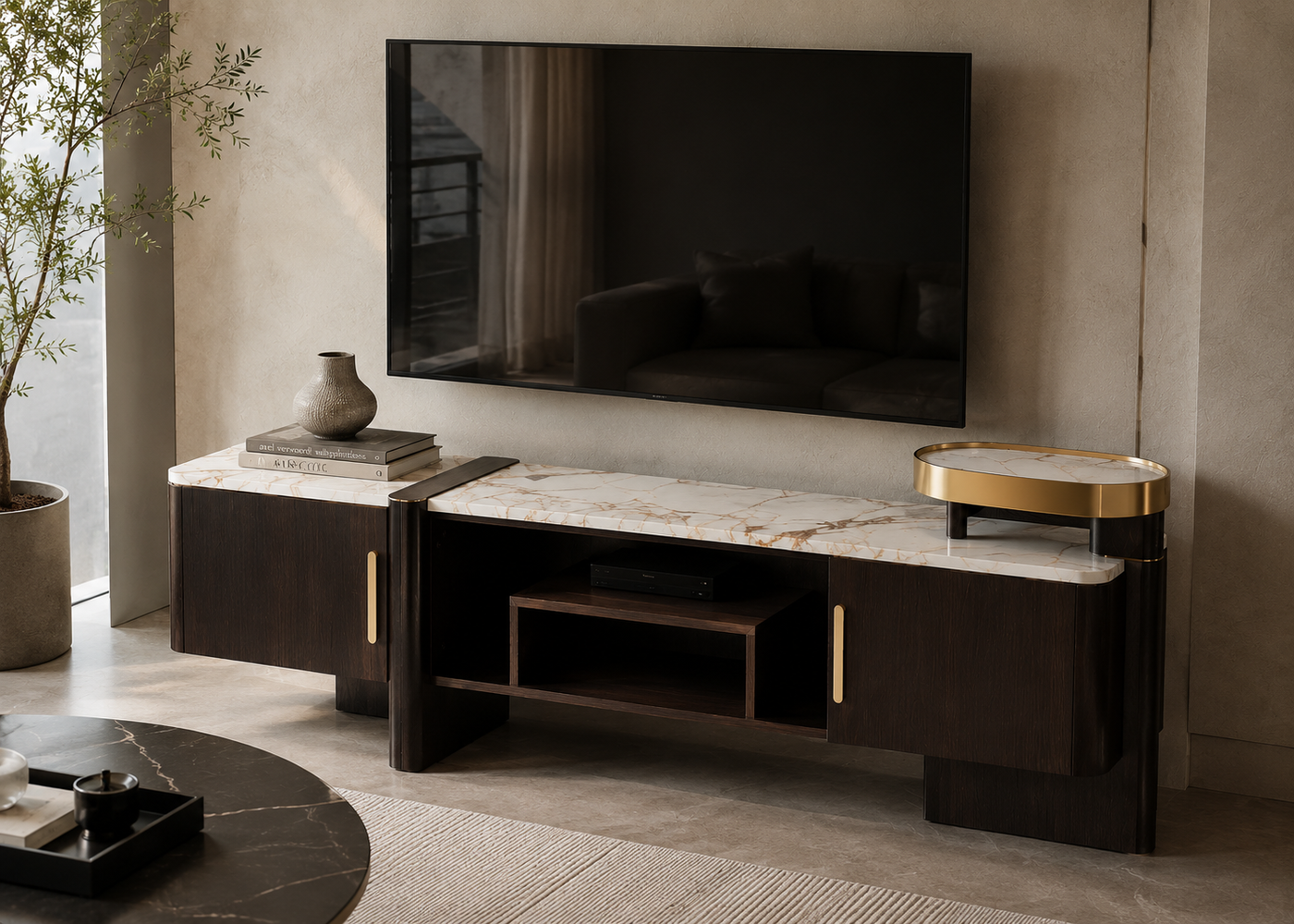
Rivoli TV Unit
Rich materiality with storage →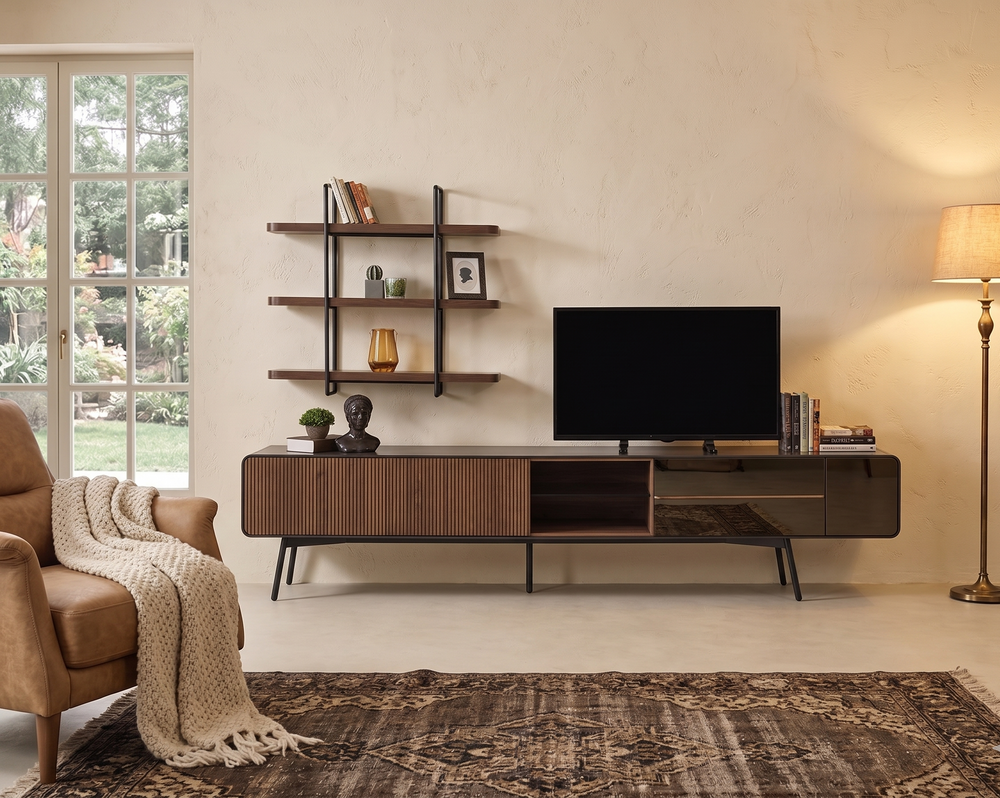
Arcadia TV Unit
Clean proportion for contemporary rooms →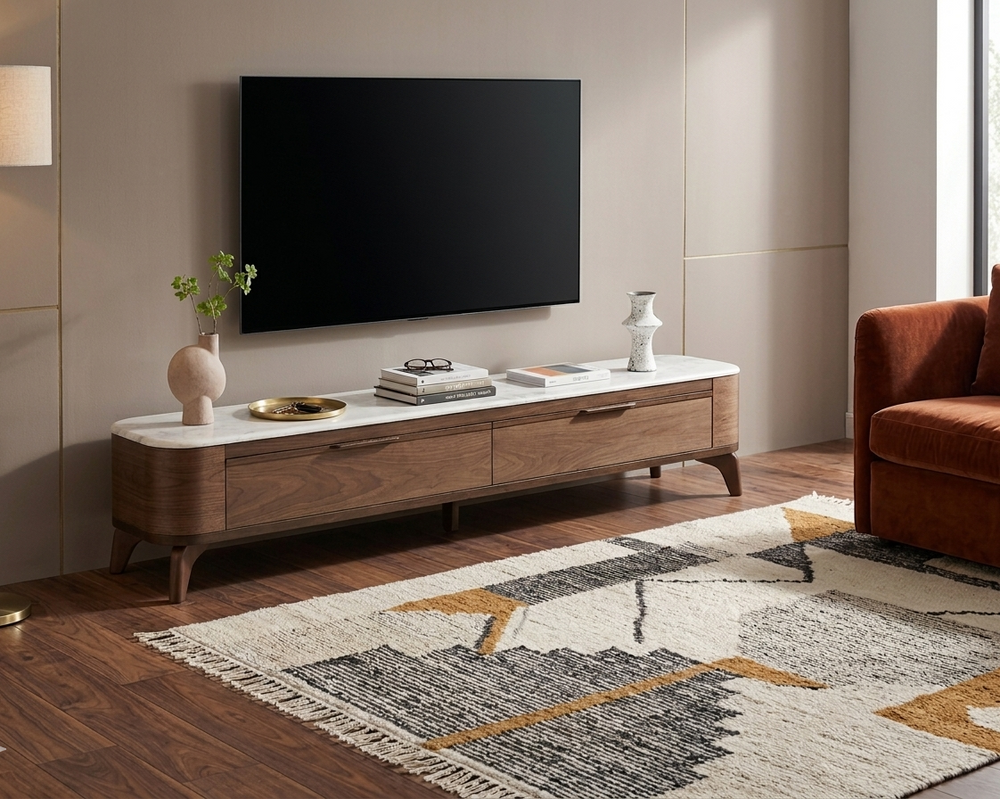
Vogue TV Console
Mid-century warmth, modern function →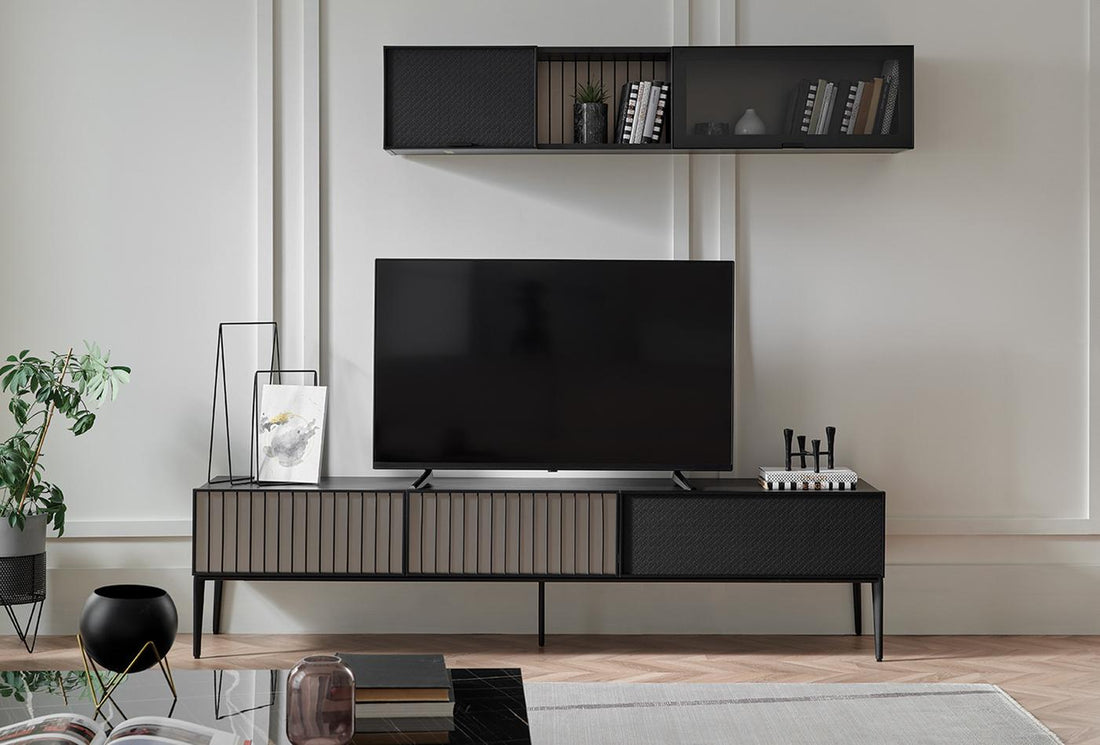
Riga TV Unit
Texture, rhythm and quiet drama →Floating, freestanding or full media wall?
Floating TV unit
Best when you want visual lightness, easier floor cleaning and a minimal appearance. Installation must suit the wall construction and loaded weight.
Ideal for: apartments & bedroomsFreestanding console
Offers flexibility, furniture-level material detail and simpler relocation. Choose sufficient width, stability and ventilation for the devices inside.
Ideal for: living rooms & rentalsIntegrated media wall
Combines the television, storage, wall panels, lighting and cable routes into one architectural composition. It requires early planning and accurate service coordination.
Ideal for: villas & complete interiorsLet the unit extend beyond the television
A TV console generally looks more balanced when it is visibly wider than the screen—often by approximately 15–30 cm or more on each side, depending on room scale. This prevents the screen from appearing top-heavy and creates space for restrained styling.
How to style a TV unit without distracting from the screen
Keep the styling low, asymmetrical and useful. One small stack of books, a sculptural object and a low bowl are usually enough. Avoid placing tall décor directly in front of the screen or filling every centimetre of the console top. The open surface is what makes the unit feel longer and the room calmer.
If the television is wall-mounted, consider an artwork, wall panel or material field that extends beyond it. Walnut slats warm the screen; pale stone provides contrast; a dark matte panel helps the television visually recede when switched off. Keep strong ceiling and window reflections in mind before selecting glossy finishes.
For speakers and soundbars, design around performance rather than concealing them without thought. Maintain the ventilation and clearance recommended by each equipment manufacturer and avoid blocking sensors, sound paths or remote signals.
Plan the invisible layer
List every device—set-top box, router, console, soundbar and streaming hardware—before selecting storage.
Map power, data, HDMI and speaker routes before fixing the television or wall panel.
Preserve airflow around electronics and follow device-specific ventilation guidance.
Keep frequently used ports and reset buttons accessible after installation.
Discover luxury TV units in Delhi NCR
Visit Avian Lifestyle’s MG Road, Sultanpur and Gadaipur showrooms to compare TV-console width, storage, marble and wood finishes, door movement, device space and cable-friendly details in person. Our team can help you choose a media unit for a living room, bedroom, lounge or complete entertainment wall.
TV-unit FAQs
How wide should a TV unit be compared with the television?
A TV unit usually looks balanced when it extends beyond the screen on both sides. Approximately 15–30 cm or more per side is a useful starting point, adjusted for wall and room scale.
What height should a TV be mounted at?
Begin with the centre of the screen close to the natural seated eye line, then adjust for screen size, viewing distance, seat height and personal comfort before fixing the mount.
Is a floating or freestanding TV unit better?
Floating units feel lighter and simplify floor cleaning but require suitable wall support. Freestanding consoles offer easier installation, flexibility and furniture-level storage. The better choice depends on the room and wall construction.
Which TV-unit material is best for a luxury living room?
Walnut and wood veneer add warmth; marble or stone adds visual weight; matte lacquer and metal create a sharper contemporary look. Mixed materials often provide the most balanced result.
How can I hide TV cables?
Plan concealed cable channels, power locations and device storage before mounting. Keep connections accessible and maintain the ventilation clearances required by each electronic device.
Can a TV unit be used in a bedroom?
Yes. A compact, low-profile or floating TV unit can provide storage and a finished look without making the bedroom feel crowded. Coordinate screen height with the actual viewing position.
Do TV cabinets need ventilation?
Electronic devices can generate heat, so closed cabinets may require airflow and clearance. Follow the ventilation instructions supplied by each manufacturer and avoid overcrowding the compartment.
Where can I buy luxury TV units in Delhi NCR?
Explore Avian Lifestyle’s TV-unit collection online or visit the MG Road, Sultanpur and Gadaipur showrooms to compare marble, walnut, textured and storage-led media units.